Summary:
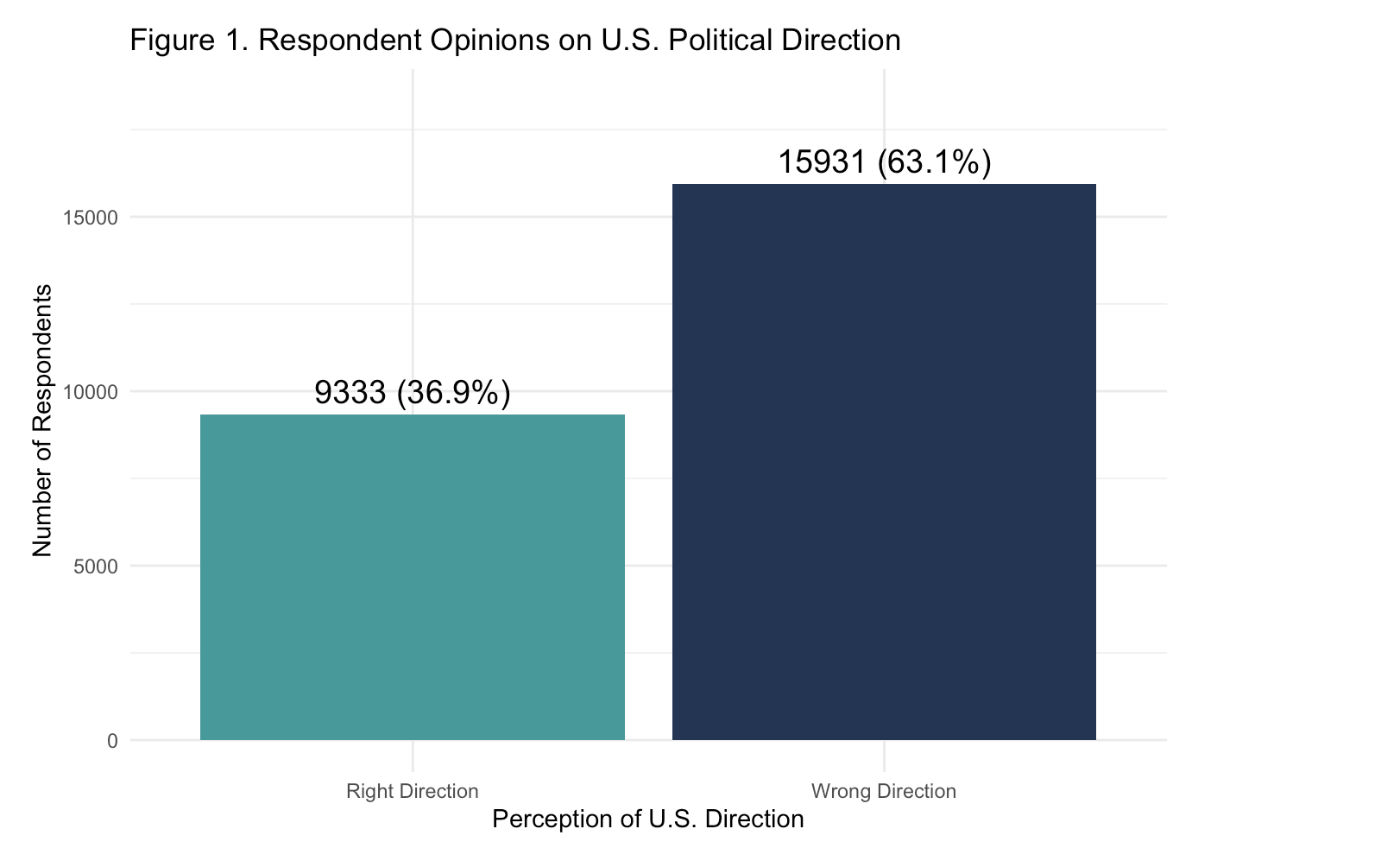
This research paper examines how age is associated with European perceptions of the political direction of the United States. Using data from the Standard Eurobarometer 101.3 survey, conducted in spring 2024 across European Union member states, the analysis investigates whether younger and older Europeans differ in their assessment of whether the United States is moving in the “right” or “wrong” direction.
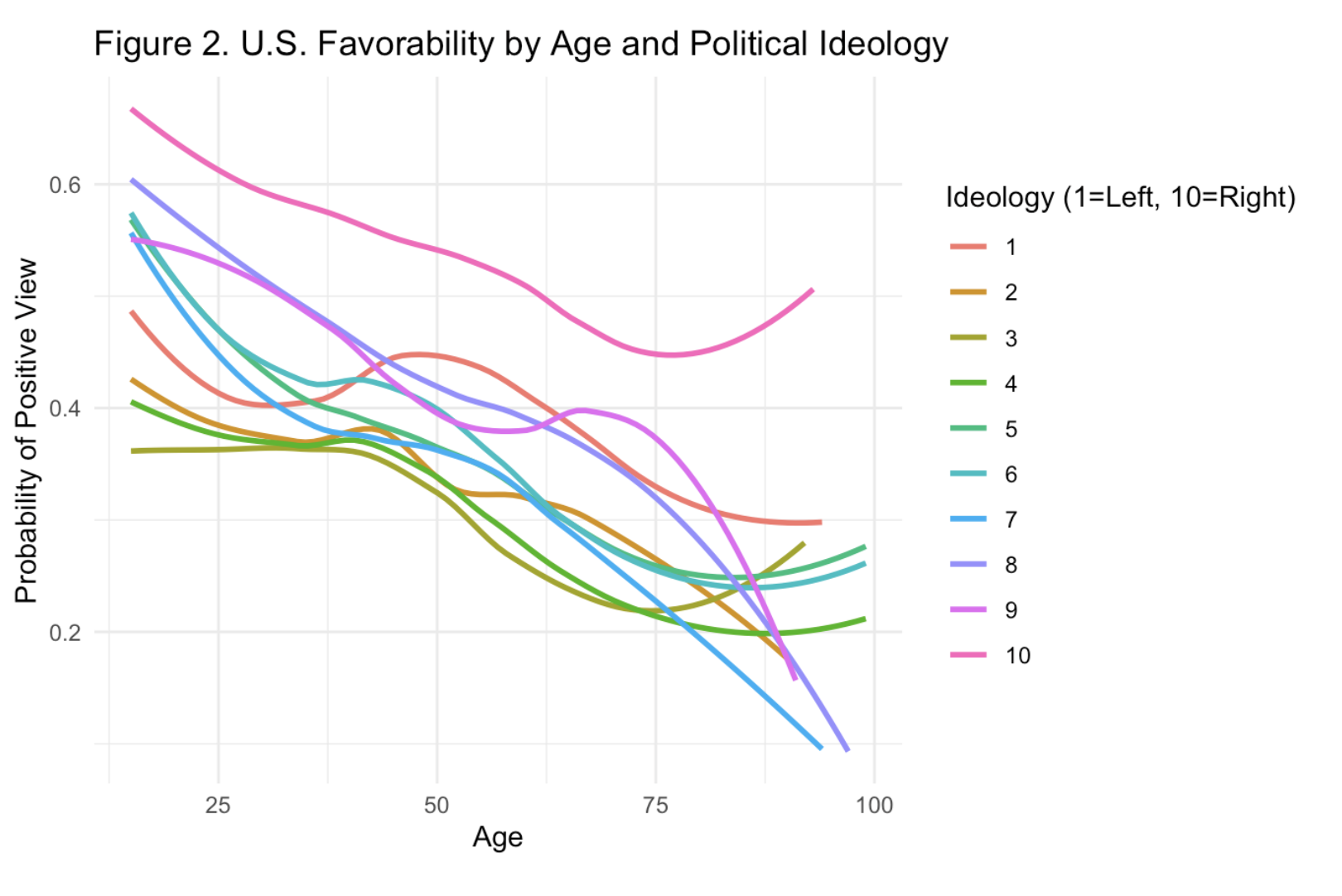
Public opinion toward the U.S. has become an increasingly important topic in Europe in recent years due to geopolitical developments, changes in U.S. leadership, and often-tense transatlantic relations resulting from a nonalignment in policy on major issues. Survey data suggest that overall favorability toward the U.S. has declined in several European countries, with significant variation across demographic groups. This study focuses specifically on age as a potential predictor of these attitudes, while accounting for individual political ideology, social class, and gender.
The analysis uses individual-level survey responses from more than 36,000 respondents across EU member states. The dependent variable is a binary indicator capturing whether respondents believe the United States is moving in the right direction or in the wrong direction. Age is treated as a continuous independent variable, and the model includes controls for political ideology, social class, and gender to isolate the relationship between age and U.S. political perceptions.
By identifying whether age is systematically related to evaluations of U.S. political direction, this paper contributes evidence to discussions about generational differences in international political attitudes within Europe. The findings provide a descriptive and statistical assessment of how opinions about the U.S. vary across age cohorts at a time of heightened geopolitical tension so close to the present day.
Findings:
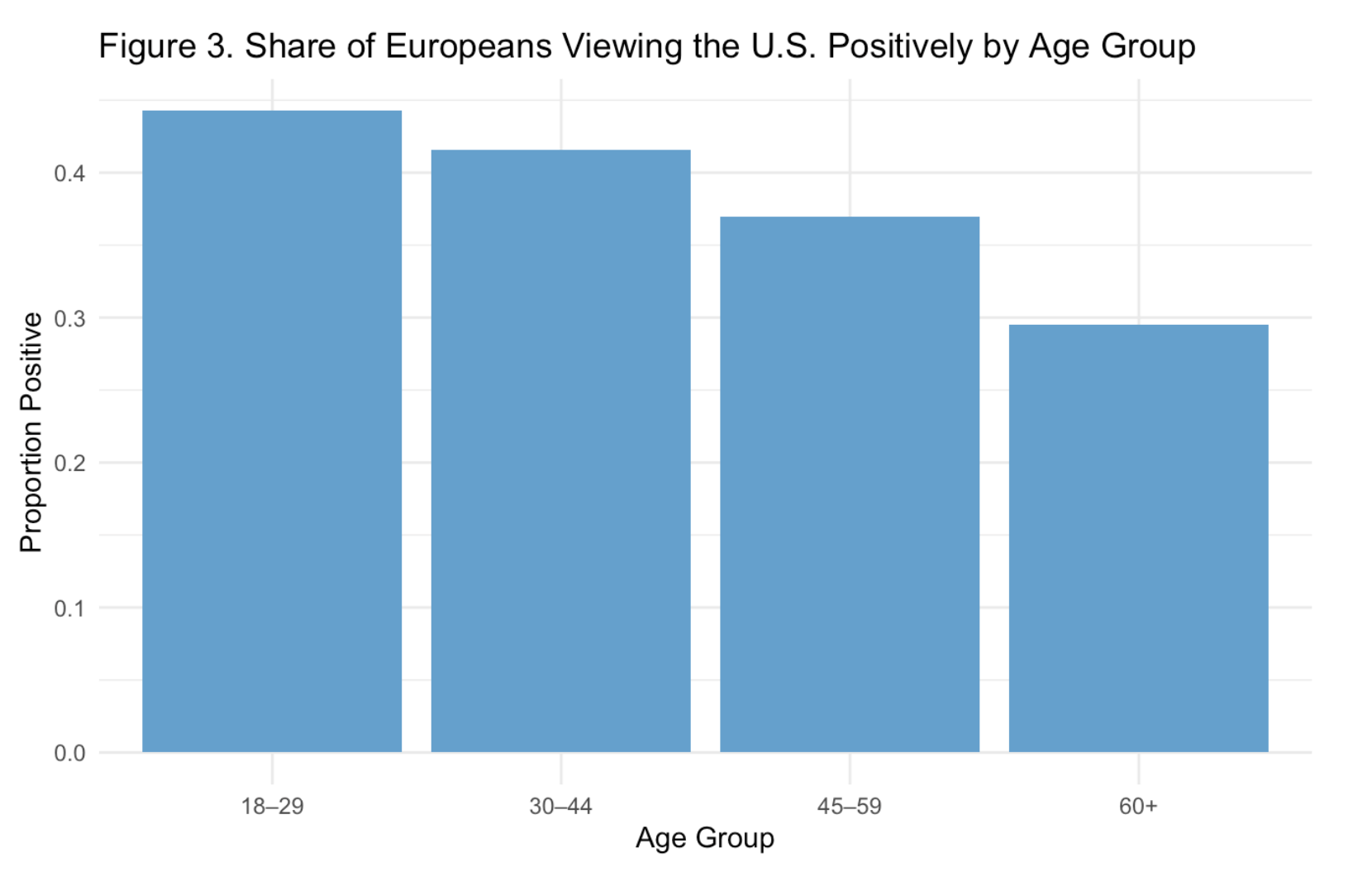
This paper set out to determine if younger Europeans maintain a “soft power” affinity for the United States. Analyzing Eurobarometer 2025 data, I find strong evidence to the contrary. Age is a significant predictor of U.S. perceptions, with younger Europeans, not older generations, more likely to view the U.S. political direction favorably.
Illustrative Charts: